Jasmine
Grand Duke of Tuscany
Jasminum sambac 'Grand Duke of Tuscany'
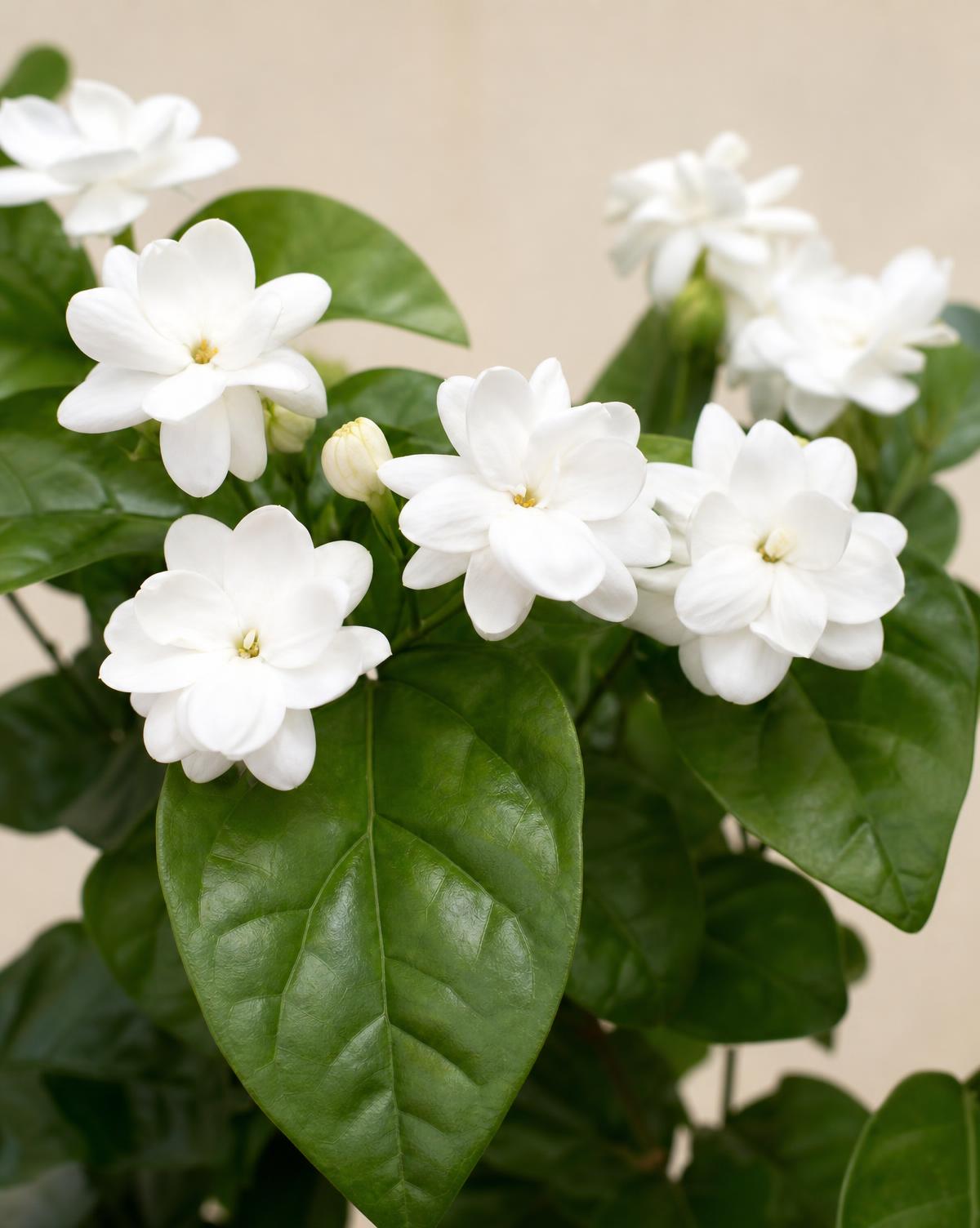
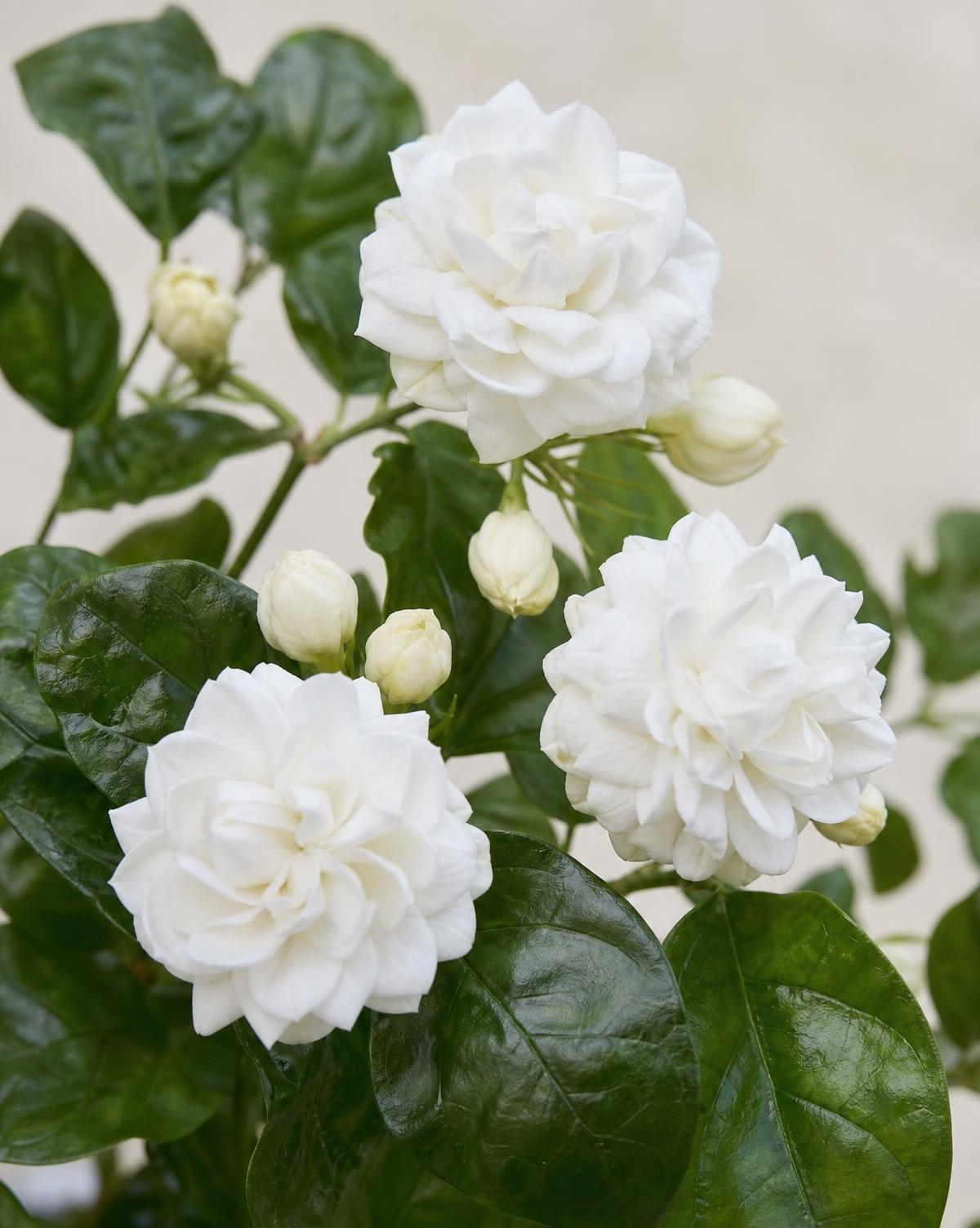
A rose among jasmines — densely petalled ivory blooms that resemble miniature gardenias and carry a softer, fuller perfume.
Scent Profile
What it smells like
Perfume unfolds in three movements. Close your eyes and follow the scent from first breath to the trace it leaves behind.
Top note
A creamy, rose-tinted opening — less sharp than single jasmines, more like gardenia-adjacent petal.
Heart note
A full, buttery floral with a faint waxy richness, dense and enveloping rather than piercing.
Base note
A warm, vanilla-tinged musk that sits close, intimate and low.
Care
How it grows
- Light
- Partial shade
- Water
- Moderate, do not overwater
- Bloom season
- Spring to fall
- Mature size
- 2–4 ft slow-growing shrub
- Hardiness
- Zones 9–11 (container-friendly)
Care notes
Tending this plant
Soil
Light, airy, well-drained mix — extra perlite or pumice is essential. Double sambacs resent wet feet and drop buds in soggy soil.
Feeding
Light feeder — a quarter-strength bloom fertilizer monthly in the growing season is plenty. Overfeeding grows leaves, not flowers.
Pruning
Minimal. Remove only dead or crossing stems; its slow, dense habit is its charm. Pinch to shape rather than cutting back hard.
Winter care
Keep warm and bright indoors below 50°F. It sulks in cold drafts — a consistent 65°F+ room keeps buds forming through winter.
Container growing
Ideal container specimen — its compact, slow habit loves a pot. A 10–12 inch container is plenty for years; avoid repotting too often, as it flowers best slightly root-bound.
Where it grows
A California story
A double-flowered heirloom sambac treasured since Tuscan gardens — slower and more compact, it rewards patience with rose-like blooms that hold for days. Shade-grown in California, its scent turns softer and rounder.